
How to store your ski and snowboard equipment in the off-season!
With the Ski and Snowboard season ALMOST wrapped up for most of us in the Northern hemisphere, it’s time to look forward to all the warm-weather activities ahead, such as hiking, mountain biking, camping, stand up paddle boarding, surfing and much more of course!
Before you transition out of the winter adventure mode, it’s important to prepare your winter equipment for the “off-season.” Doing this will help protect your investment and ensure everything from your helmet to your skis/snowboard is in pristine condition when the snow starts falling again.
Here’s our advice on storing your ski and snowboard equipment over the summer months!
How to prep ski and snowboard for storage
It’s worth keeping in mind the No. 1 thing you shouldn’t do at the end of the season is “throw your skis, snowboard, and/or boots in a garage or up the attic, where you’re likely to forget about them.”
Have you already made this mistake? It’s not too late to sort it out! You may want to move quickly because rust and mold don’t mess around here in the UK!
Once you’ve properly aired and dried all your equipment and clothing, a quick wipe down of your Skis/Snowboard, using a clean, dry microfiber cloth, works well. You may want to consider some sort of storage bag for your hard goods such as snowboard or skis (your travel bags are great).
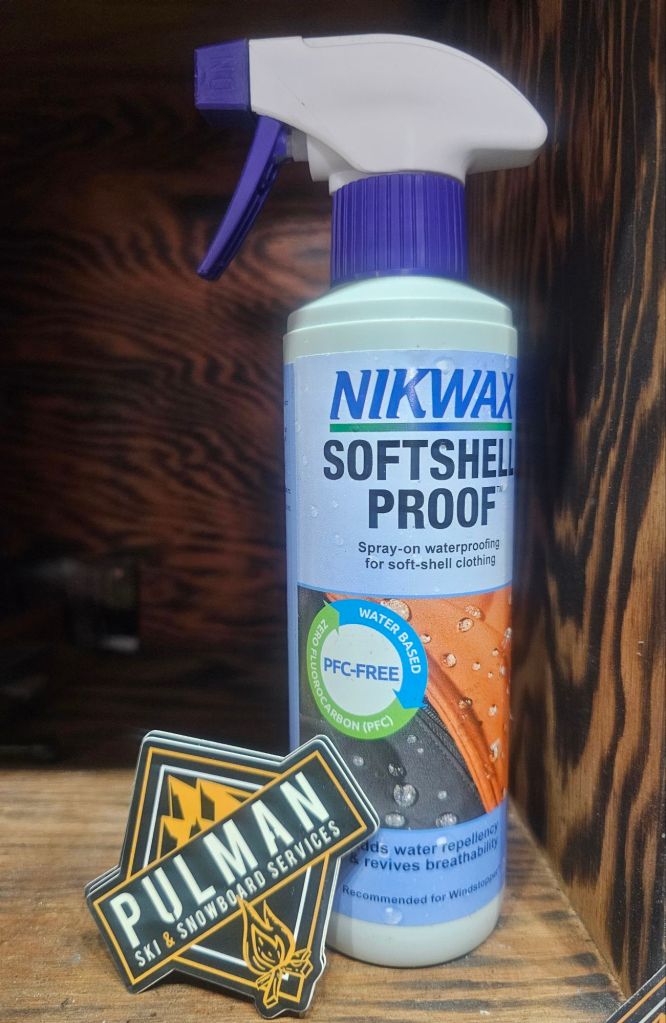
For soft goods (helmets, salopettes, gloves etc) especially smelly ones, you will want to pick up an outerwear-friendly detergent! We use Nikwax Tech Wash and Nikwax wash-in waterproofer. Also, some fresh dryer sheets to place into your ski/snowboard boots and gloves work a treat!
Nikwax Hard-Shell Outerwear Care Kit:
This kit includes everything you need to wash your ski or rain jacket and then re-waterproof it. Nikwax has been in the H2O repellent game since the 1970s and is widely trusted as the brand to beat for all-season moisture protection. We use this on everything from gloves and hats/beanies to jackets and salopettes.

How to store ski and snowboard.
- Clean and prep your skis/snowboard.
- Wash and prep soft goods
- Prep your boots, helmets and goggles
- Choose a suitable storage location
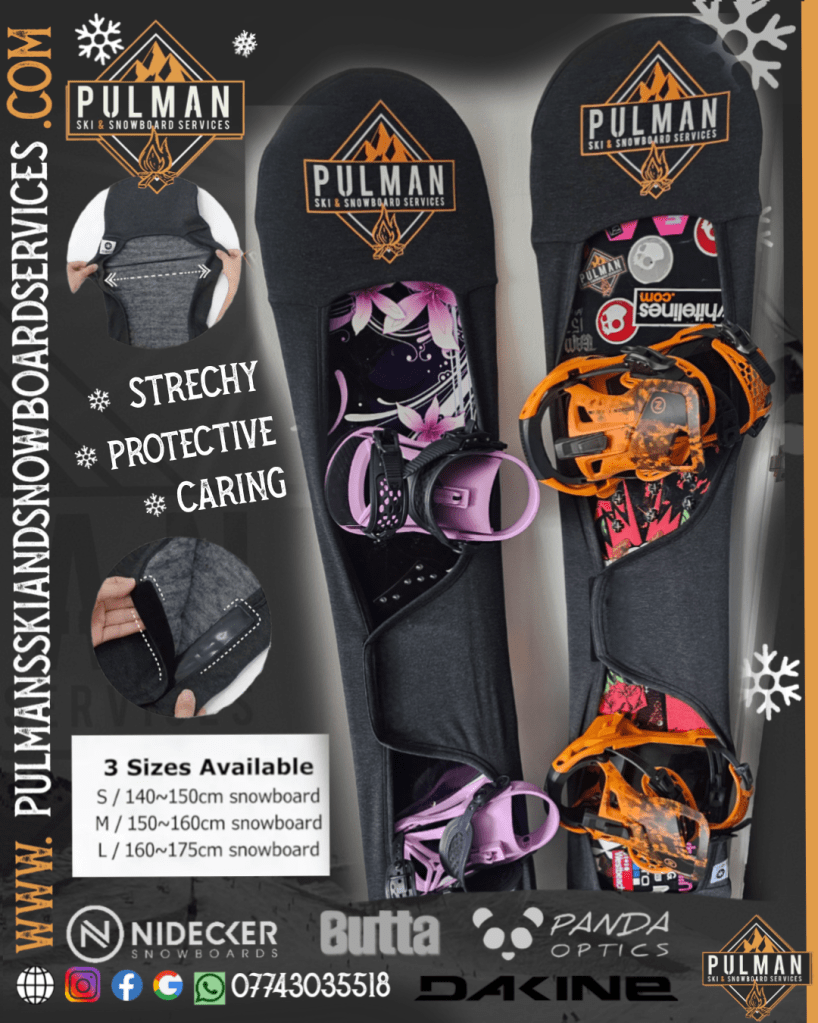
- Highly recommended Ski/Snowboard sleeve! Available here at PulmansHQ
1. Clean and prepare your skis/snowboard.
This may sound like a no-brainer, but you should definitely wipe down and clean all your gear after your last day on the mountain. More so, a regular maintenance schedule to keep your Skis/Snowboard in good condition. Here at Pulmans HQ, we use good quality wax. There is no need for storage wax when receiving our servicing. If there is white/blury edging, we suggest a service, especially before storage. Receiving a service at the end of the season will be enough and will last long enough for your next years ski/snowboard holiday.
This is especially important when prepping equipment for off-season storage.
You will want to fully clean, rewax and scrape your Skis/Snowboard right before the start of next season. Here’s where we come into consideration, right?
2. Wash, prepare, and store soft goods
For items like thermals, socks, gloves etc (check llwash labels). Ensure everything is dry and clean before storing them for the summer. This will extend the life of your equipment. If you have had a great year and your stuff is dirty, you can wash and waterproof soft goods to get ready for the start of the next season.
However, soft goods with waterproof properties, like jackets, ski/snow pants and gloves shouldn’t be treated as ordinary laundry. Instead, use detergent and a wash-in waterproofer designed for the job.
Not all ski gloves can be washed, so check the tags and proceed with caution. However, any pair can be cleaned with a damp cloth. Afterwards, consider waterproofing treatment. These come in both spray and wax forms. For leather gloves, use wax. Lastly, stick a dryer sheet in each glove to keep them smelling fresh until next winter.
3. Prepare your boots, helmets, and goggles
Do not forget to clean, dry, and buckle your boots. This will help them stay in good shape and avoid getting stinky and mouldy over the summer. Put a dryer sheet or two in each boot for extra freshness.
Be sure to air out your helmet and goggles before storing them as well. For the former, wipe the exterior with a damp cloth to remove any grime. The interior padding of many helmets can also be removed and washed on a gentle cycle, but be sure to double-check the manufacturers’ recommendations before proceeding.
Use a dry, clean microfiber cloth to clean your goggle lenses. Because most ski goggles are treated with an antifogging spray during manufacturing, it’s best to avoid any harsh cleaners or sprays. for anti fogging sprays, we sell Muc-off anti fog spray and highly recommend it on both goggles and glasses.

4. Choose a suitable storage location
Regardless of your storage setup, there are several things we can all keep in mind. Try and store your equipment in a dry, ventilated area, avoid damp areas, and do not store your equipment next to hot water heaters or sprinkler systems as these typically create moisture and can promote rust on your equipment!
The garage is an OK place to store items, however, it’s best to hang equipment from the wall or ceiling, rather than leaving them on the ground. This is due to the cement/concrete floor and the limestone/dust it gives off causes damage.
A storage unit or shed can also work as a place to store your equipment, but do not store it on the ground, hanging it up is best. Make sure that whatever space you use is weatherproof. A dry closet or attic can also work, but only if there’s decent ventilation.
Another option, for hard goods in particular, is investing in a padded, waterproof bag for storage. Not only will this help it avoid knocks and bumps but it also makes traveling to and from the mountain easier.
Ultimately, common sense is your best friend when it comes to storing your ski and snowboard equipment during the warmer months. Hanging up your clean soft goods in a cool, dry place is the best way to ensure it’s ready to go when you need it next (wardrobe)
Remember, you will always get back what you put in. A little preparation will go a long way to keeping your valued equipment in good shape, and it will last longer.
 Pulman's Ski And Snowboard Services